
Construction site security involves deploying trained armed and unarmed guards to prevent theft, vandalism, and unauthorized access across active job sites. Nationwide Security Guards assigns former law enforcement and military-trained personnel who patrol grounds, monitor equipment as part of construction equipment theft prevention, and enforce access control, using customized deployment plans that address each site’s specific layout, schedule, and risk profile.
What Makes Construction Sites Prime Theft Targets?
Open perimeters, high-value materials, and rotating crews create conditions thieves exploit at will. Valuable equipment and building supplies sit on-site for weeks or months, often with limited oversight once workers leave for the day. That combination of exposed assets and minimal supervision makes **construction site security** a business necessity rather than an afterthought.
The financial exposure is severe. The construction industry loses up to one billion dollars annually to theft, according to reporting on job site protection trends. For general contractors and developers managing tight margins, that industry-wide figure translates into real project delays, insurance disputes, and replacement costs that erode profitability on individual jobs.
Why Are Job Sites Easier to Steal From Than Other Properties?
Job sites lack the fixed walls, locked doors, and consistent staffing that protect typical commercial buildings. Equipment often stays outdoors overnight, and site boundaries change as construction progresses. This constant flux gives opportunistic thieves and organized theft rings a moving target that’s harder to secure with static measures alone.
Common vulnerabilities include:
- Unsecured perimeters with multiple points of entry
- Idle machinery left unattended overnight or on weekends
- Limited lighting and surveillance during off-hours
- High employee and subcontractor turnover, complicating access tracking
- Remote locations far from routine police patrols
Construction sites belong among the broad category of properties, including offices, retail stores, and gated communities, that demand round-the-clock protection. Security personnel available 24/7/365 close the supervision gap that leaves job sites exposed after hours. Reliability and professionalism remain the deciding factors when contractors evaluate which security solution can consistently reduce theft risk across an active, ever-changing job site.
Why Does Job Site Security Matter For Safety?
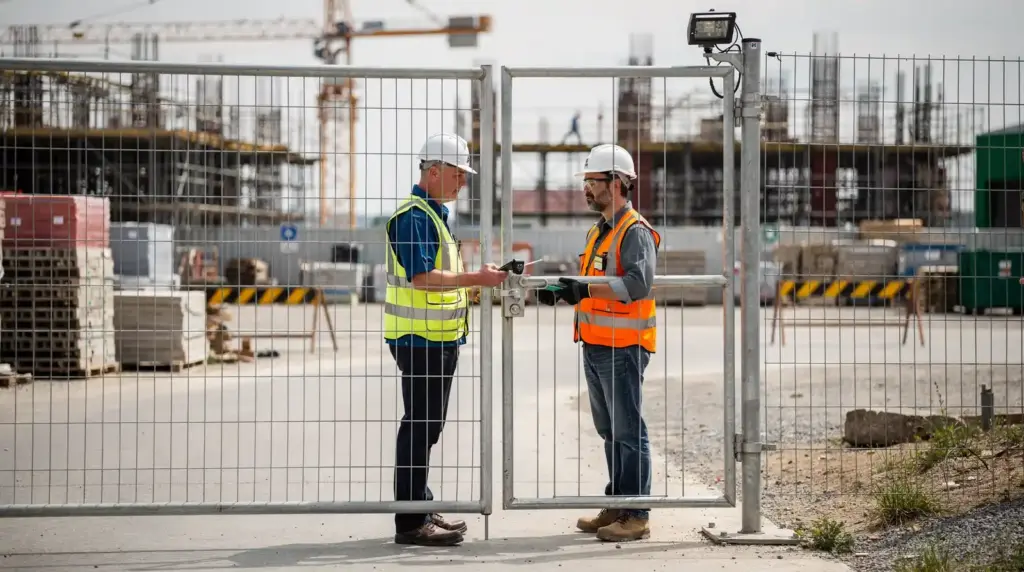
Protecting workers and visitors from harm, not just guarding tools and machinery, stands as the central purpose of construction site security. Theft losses grab headlines, but an unsecured site poses a direct danger to anyone who steps onto it. Trespassers and unauthorized visitors do not know where hazards sit, which zones require hard hats, or which areas hold live electrical lines.
That gap in knowledge turns into injury risk fast. Unauthorized individuals wandering into an active work zone can easily get hurt. Their presence creates significant legal liability for the contractor in charge. A single incident involving an outsider can halt a project, trigger investigations, and expose the company to costly claims.
Is Security Really A Safety Issue On Construction Sites?
Yes. A well-built security plan functions as a safety plan for the entire site. It ensures that only trained, authorized personnel remain on the property, following posted protocols and wearing required personal protective equipment. Restricting access does more than deter theft; it keeps the workforce operating in a controlled environment where risk stays predictable.
Construction site security guards support that control in several ways:
- Verifying credentials before allowing entry to active work areas
- Monitoring compliance with PPE and safety zone rules
- Identifying and removing unauthorized visitors before they reach hazards
- Documenting incidents that could otherwise become liability disputes
Nationwide Security Guards deploys trained armed and unarmed personnel across the country, applying a professionalism standard built for demanding, high-risk environments. That proactive posture protects property, people, and assets together, rather than treating safety and security as separate concerns. For project managers weighing site protection options, that combined approach offers a practical starting point.
What Do Construction Site Security Guards Do?
Construction site security guards protect equipment, materials, and personnel through a defined set of duties that go beyond simply standing watch. Nationwide Security Guards deploys highly trained armed and unarmed security guards across the country, giving general contractors and site superintendents a proactive layer of protection rather than a reactive one.
Coverage does not stop at sundown or resume only on weekdays. Guards remain on duty 24 hours a day, 365 days a year, matching the around-the-clock exposure that active job sites and stored equipment face. A vacant lot at midnight carries the same theft risk as a busy site at noon, and staffing reflects that reality.
What training do construction security guards receive?
Training covers far more than patrol routines. Personnel assigned to job sites learn first aid, CPR, and AED response alongside emergency preparedness protocols. Construction environments carry inherent physical hazards. Guards also study access control and management procedures, ensuring only authorized workers, subcontractors, and deliveries move through the site perimeter.
Every guard carries the proper credentials before stepping onto a job site. Guards are fully trained, licensed, bonded, and insured, meeting the compliance standards that commercial developers and general contractors expect from a professional security partner. That documentation protects the contractor’s liability position as much as it protects the equipment on-site.
Typical responsibilities include:
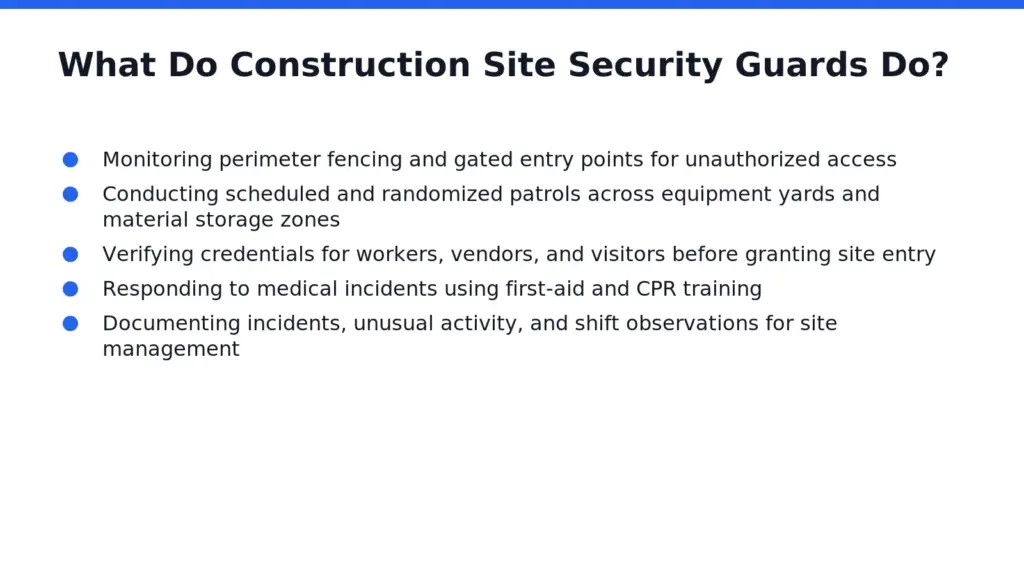
- Monitoring perimeter fencing and gated entry points for unauthorized access
- Conducting scheduled and randomized patrols across equipment yards and material storage zones
- Verifying credentials for workers, vendors, and visitors before granting site entry
- Responding to medical incidents using first-aid and CPR training
- Documenting incidents, unusual activity, and shift observations for site management
Because no two sites share the same layout, staffing model, or risk profile, security solutions are built around each client’s specific requirements, from a single-entrance residential build to a sprawling commercial development with multiple access points.
Armed Or Unarmed: Which Fits Your Site?
Site risk level determines the answer, not personal preference. A downtown high-rise project surrounded by foot traffic carries different exposure than a remote equipment yard holding six-figure machinery overnight. Nationwide Security Guards deploys both armed vs unarmed construction security options nationwide, matching guard type to the threat profile of each project rather than applying a single standard across every site.
Unarmed construction site security guards handle the bulk of routine coverage: monitoring gates, logging deliveries, and deterring casual trespassers through visible presence alone. Armed officers enter the picture when a site’s location, asset value, or history of theft and vandalism pushes risk higher. Nationwide’s armed personnel come from backgrounds in former law enforcement. Military service, bringing specialized training that unarmed roles do not require. Coverage comes in two formats:
- Uniformed armed guards stationed at fixed posts or running mobile patrols across the property
- Plainclothes armed officers in business attire, providing a discreet presence for sites that need protection without a visible security footprint
Do construction sites need armed guards?
Not every site does. Armed coverage fits high-risk situations, projects with expensive equipment, high-crime areas, or a documented pattern of break-ins. Nationwide Security Guards builds armed solutions around these elevated-risk scenarios across a range of industries, construction included, rather than deploying armed staff as a default.
Can a site use both armed and unarmed guards together?
Yes. Many projects mix coverage types depending on shift, zone, or phase of construction. A superintendent might staff unarmed guards at pedestrian gates during business hours. Shift to armed overnight patrol once equipment sits idle and exposure rises. Security providers able to supply both officer types under one contract give project managers flexibility to adjust coverage as site conditions change, without renegotiating a new vendor relationship each time risk shifts.
How Do Mobile Patrols And Surveillance Trailers Help?
Mobile patrol security construction coverage extends protection beyond a single guard shack. Guards assigned to roving duty hold fixed posts when needed, then move across the property as conditions change, closing gaps that a stationary post alone cannot cover. This flexibility matters most after dark, when equipment yards and material laydown areas sit exposed and unattended.
Coverage cannot follow a nine-to-five clock. Theft attempts happen at any hour. Patrol schedules and monitoring routines have to reach into nights, weekends, and holidays rather than stopping when the crew goes home. A site left unwatched overnight invites the exact loss that daytime precautions were meant to prevent.
What Role Do Surveillance Trailers Play On A Job Site?
Mobile surveillance trailers add a technology layer that works alongside foot and vehicle patrols rather than replacing them. Positioned near equipment staging areas or vulnerable perimeter points, they extend visibility into zones a single patrol route might reach only periodically. Combining physical presence, camera technology, and trained personnel creates layered defenses that are harder to defeat than any one measure alone.
How Do Security Providers Decide Where To Place Patrols And Trailers?
Placement follows a consultative security approach rather than a one-size-fits-all template. Security planners assess each site’s layout, access points, and equipment concentration, then strategically deploy personnel, systems, and technology where risk is highest. This process reduces both loss exposure and disruption to active construction work.
Project managers evaluating coverage options generally weigh a few factors:
- Site size and layout, which determines how many patrol routes or trailer positions are needed
- Equipment value and location, since concentrated assets warrant closer, more frequent monitoring
- Access point count, which shapes how patrols and technology divide their attention
- Work schedule, including off-hours and weekend exposure when crews are absent
Layering these elements, rather than relying on cameras or guards in isolation, gives superintendents a security posture built for the specific risks their site actually faces.
How Do You Control Site Gate Access?
Construction site gate access control starts with trained personnel managing every entry point on a rotating or fixed schedule. Qualified guards verify credentials, log arrivals, and block entry to anyone lacking proper clearance. This gatekeeping function ranks among the core competencies expected of professional security personnel stationed at active job sites, alongside emergency response and basic first aid.
Strict entry protocols exist for a reason beyond stopping theft. A site with uncontrolled access invites injury as much as loss. Trained, authorized personnel wearing the correct protective equipment should be the only people crossing the perimeter, and gate staff enforce that boundary consistently, shift after shift.
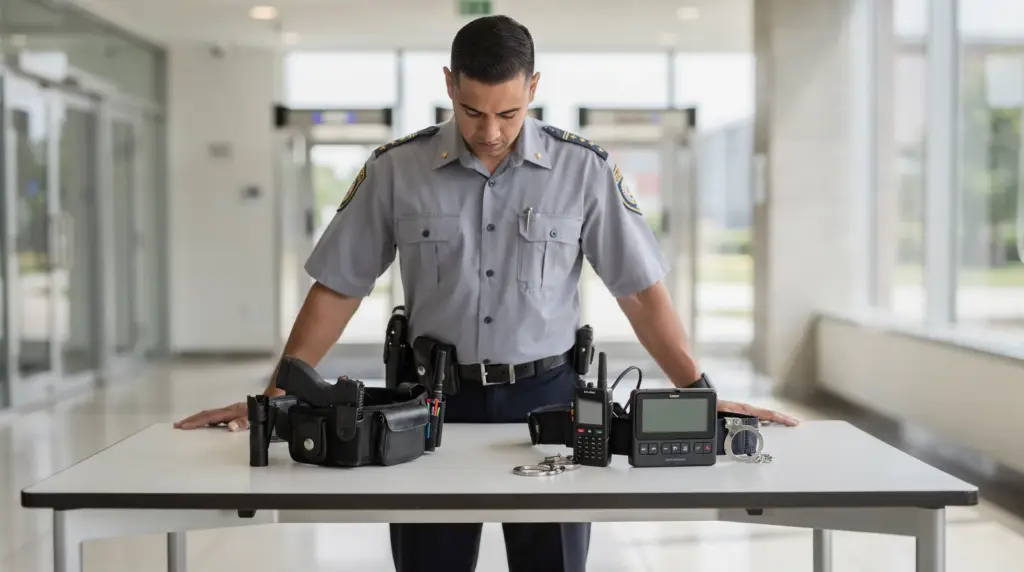
Effective access control depends on more than a clipboard and a checklist. Guards typically carry a full set of access-all keys for the property, along with the communication tools and documentation needed to manage entry points and respond quickly if conditions change. That level of readiness turns a simple gate check into an active safeguard for the whole site.
What Does a Gate Access Control Plan Usually Include?
A workable plan combines several layers rather than relying on a single measure. Superintendents typically see the following elements deployed together:
- Credential verification for all workers, subcontractors, and delivery drivers
- Sign-in and sign-out logging at every shift change
- Restricted zones for equipment yards or hazardous material storage
- Coordination with site supervisors on daily personnel lists
Should Every Site Use the Same Access Protocol?
No single protocol fits every jobsite. Layout, crew size, and site risk all shape the plan. Access control measures are built around the specific configuration and requirements of each property, rather than applied as a generic template, which is why a consultative review of the site typically precedes any protocol rollout.
How Do You Choose The Right Security Provider?
Five factors separate a reliable construction site security partner from a liability: consultative planning, proven construction experience, geographic reach, verified credentials, and scalability. Contractors who skip this evaluation often discover gaps only after a theft or liability incident exposes them.
A qualified provider starts with a consultative approach rather than a one-size-fits-all package. The right partner assesses a site’s layout, schedule, and risk profile, then matches personnel, technology, and monitoring systems to those specific conditions. Generic staffing plans rarely account for shifting site boundaries or phased construction timelines.
Experience matters just as much as methodology. A provider with a proven history of working with construction firms understands job site dynamics: material deliveries, subcontractor turnover, and the chaos of active build phases. That familiarity translates into fewer disruptions and faster response when incidents occur.
Does the provider need a national footprint?
Contractors managing projects across multiple states benefit from working with a provider that maintains regional offices positioned across the country. This structure supports consistent protection standards whether a project sits in one city or spans several regions. National reach also simplifies vendor management for firms juggling multiple simultaneous builds.
What credentials should a security guard hold?
Guards assigned to a job site should be fully trained, licensed, bonded, and insured before any contract is signed. These credentials protect contractors from liability exposure and confirm the guard has met baseline professional standards. Skipping this verification step leaves site owners exposed if an incident involves an unqualified officer.
Evaluation checklist for project managers:
- Consultative site assessment before deployment
- Documented experience with construction clients
- Regional or nationwide coverage for multi-site portfolios
- Verified licensing, bonding, and insurance
- Capacity to scale from a single site to a full national program
Whether overseeing one job site or a national portfolio, contractors need a provider capable of scaling protection without sacrificing consistency or accountability.
Why Choose Nationwide Security Guards For Your Site?
Reliability separates a functioning job site from one plagued by theft, vandalism, and liability claims. Nationwide Security Guards stands for reliability, professionalism, and comprehensive construction site security solutions built around each project’s unique layout and risk profile. General contractors and site superintendents cannot afford guesswork when equipment, materials, and crew safety are on the line.
Protecting property, people, and assets remains the company’s core commitment on every engagement. This focus applies whether the job site spans a single city block or a multi-phase regional development. Construction site security guards deployed under this standard operate with the same professionalism regardless of project size, minimizing the gaps that unauthorized visitors or opportunistic thieves tend to exploit.
Coverage never stops at business hours. Experienced personnel remain available 24/7/365, closing the overnight and weekend windows when most job site losses occur.
What Types of Guards Does Nationwide Security Guards Provide?
Highly trained armed and unarmed guards are deployed nationwide, giving project managers a choice suited to each site’s risk level. This flexibility around armed vs unarmed construction security allows a superintendent to match staffing to the value of equipment on-site and the surrounding neighborhood’s risk history.
How Does Coverage Compare Across Site Needs?
| Site Factor | Better-Suited Guard Type |
|---|---|
| High-value equipment, isolated location | Armed |
| Active daytime crew, gate/access focus | Unarmed |
| Multi-entrance perimeter | Combined armed/unarmed teams |
Proactive protection, not reactive response, defines the standard. Contractors weighing security partners should prioritize firms committed to exceeding expectations rather than simply meeting minimum coverage requirements.
Conclusion
In closing, construction site security demands a comprehensive approach that addresses the multifaceted risks inherent to active building operations. Nationwide Security Guards delivers the professional expertise and nationwide infrastructure necessary to protect your assets, personnel, and project timeline with unwavering reliability. Our highly trained security personnel, available around the clock, provide the proactive protection your construction site requires. Partner with a security provider committed to exceeding expectations and safeguarding your operations with the professionalism your project deserves.