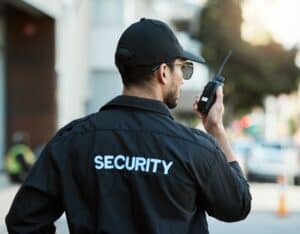
Parking Lot Security Guards in {TexasCities}
Introduction
In a busy coastal city like St. Petersburg, FL, well-managed parking lots are essential to visitor safety, tenant satisfaction, and property value. Choosing the right security guards requires more than picking the lowest bid; it involves assessing risk, verifying credentials, and aligning service with your operational goals. The following guide outlines a clear process to help you find the best parking lot security guards for your property.
Define risks and objectives
Begin by mapping your lot’s risks—hours of operation, lighting gaps, blind spots, traffic flow, and incident history. Consider surrounding businesses, special events, and seasonal tourism that can change demand. Translate risks into objectives such as vehicle theft reduction, trespass deterrence, safe employee escorts, or efficient event traffic. This clarity will inform required coverage levels, post orders, and technology choices.
Verify licensing training and insurance
In Florida, officers should hold a valid Class D license, with Class G for armed assignments. The security company must carry a Florida Class B agency license through the Department of Agriculture and Consumer Services. Ask for copies of licenses, background screening practices, and proof of insurance—general liability, workers’ compensation, and commercial auto—at limits appropriate to your property’s exposure.
Evaluate deployment and technology
Strong providers blend visible deterrence with data-driven oversight. Compare options such as foot and vehicle patrols, bike units for garages, and fixed posts at entrances. Inquire about digital tour verification, body-worn cameras, incident reporting platforms, and integration with cameras or license plate recognition. A vendor that can tailor patrol frequency to peak hours and provide real-time reporting will add measurable value.
Assess staffing supervision and culture
Ask how candidates are recruited, screened, and trained for parking environments—traffic direction, de-escalation, customer service, and ADA awareness. Effective supervision is pivotal; look for field supervisors who conduct spot checks and coach guards. Low turnover, paid training, and clear escalation protocols are positive indicators of a performance-focused culture.
Set KPIs contracts and communication
Define service-level expectations before signing. Establish KPIs such as response times, patrol completion rates, lighting and hazard reports, escort counts, and incident reduction targets. Request sample post orders, report templates, and a communication ladder for emergencies and non-urgent issues. Choose contract terms that allow pilot periods, periodic reviews, and flexible scaling during events or peak seasons.
Balance cost with value
Obtain multiple proposals using a consistent scope. Compare bill rates alongside supervision ratios, training hours, benefits, and included technology. Cheaper bids may hide thin coverage or weak oversight; prioritize total cost of outcomes, not hourly price alone. Ask for local references, recent incident metrics, and case studies from similar St. Petersburg properties.
Conclusion
By grounding your search in risk, compliance, and measurable performance, you can identify security partners who deter crime, enhance guest experience, and protect assets. With the right guards and technology, your St. Petersburg parking lot can operate safely and efficiently—day, night, and through every season of the year.